
U.S. Cavalry Officer’s Dress Helmet, Model 1881 Pattern
Maker: M.C. Lilley & Co., Columbus, Ohio
Date: 1883 to 1887
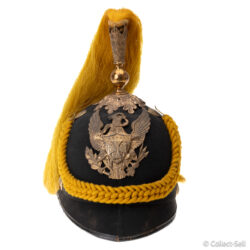
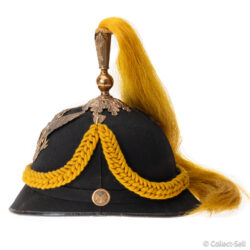
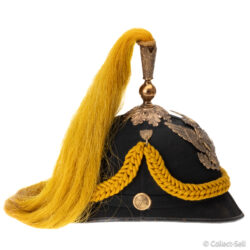
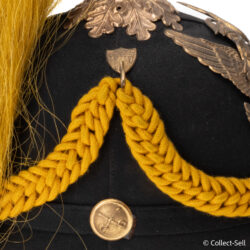
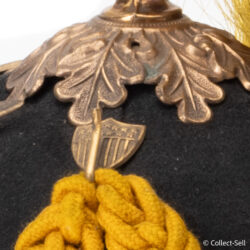
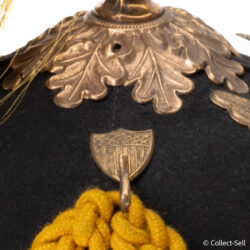
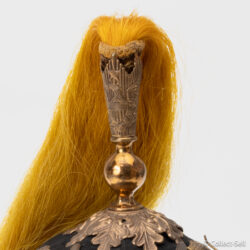
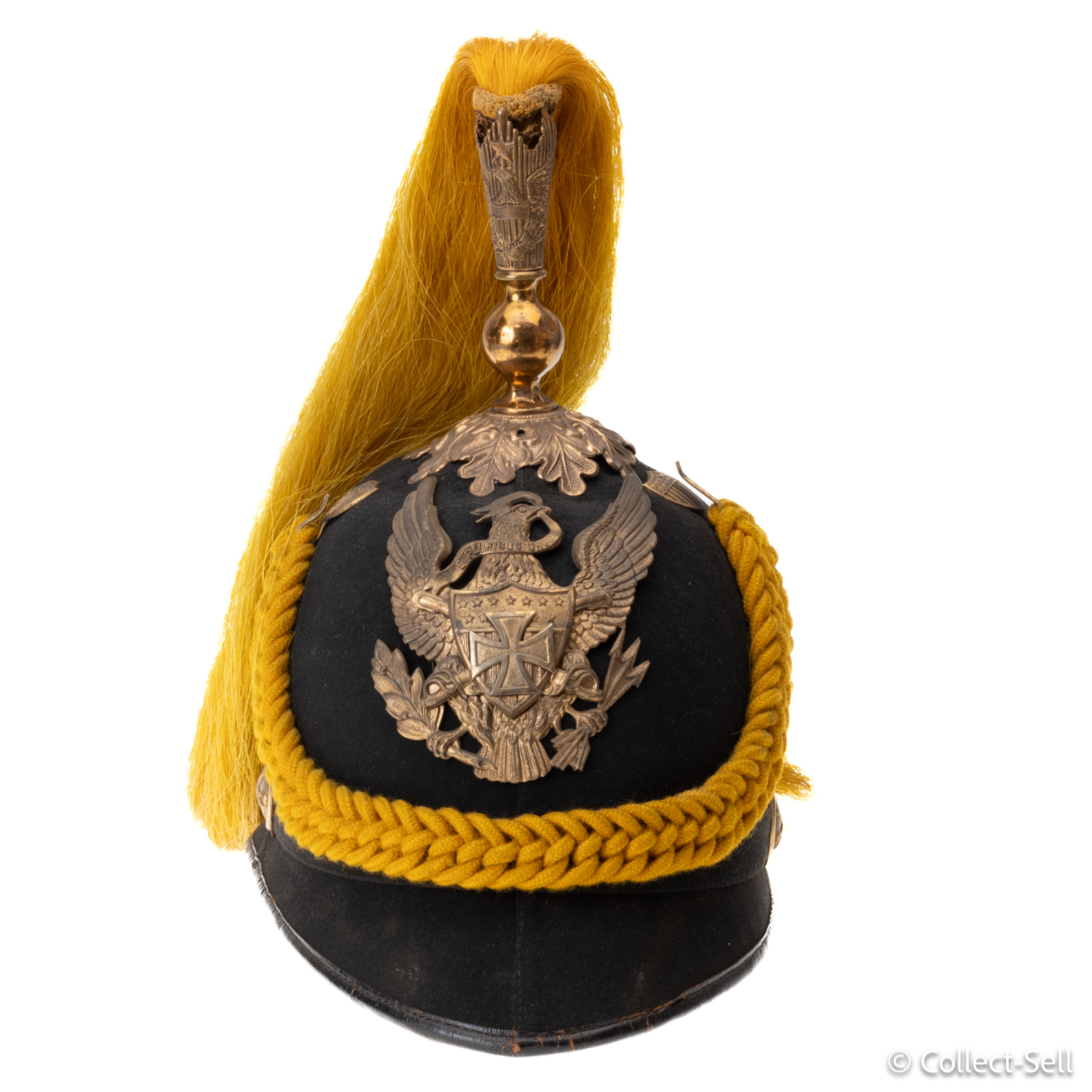
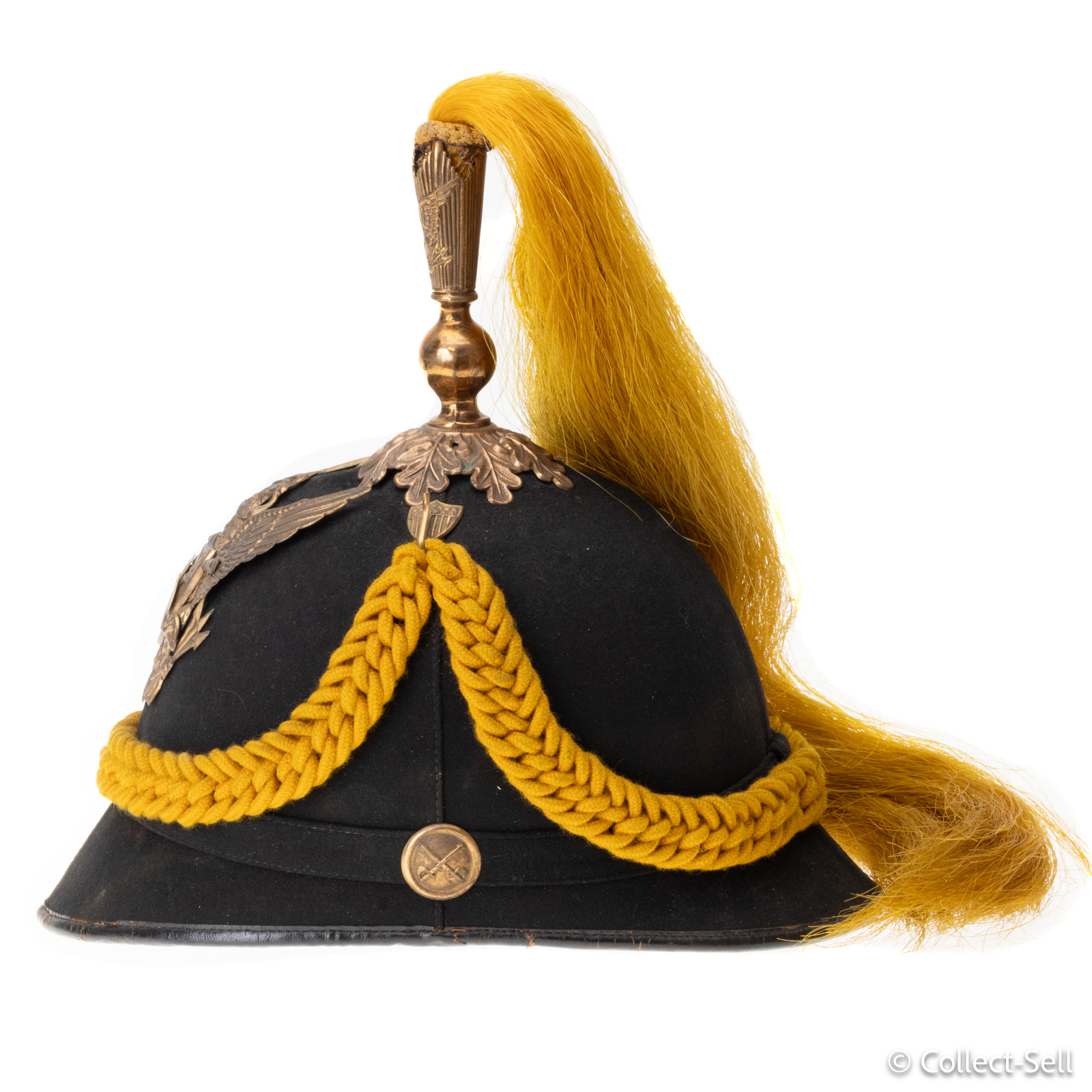
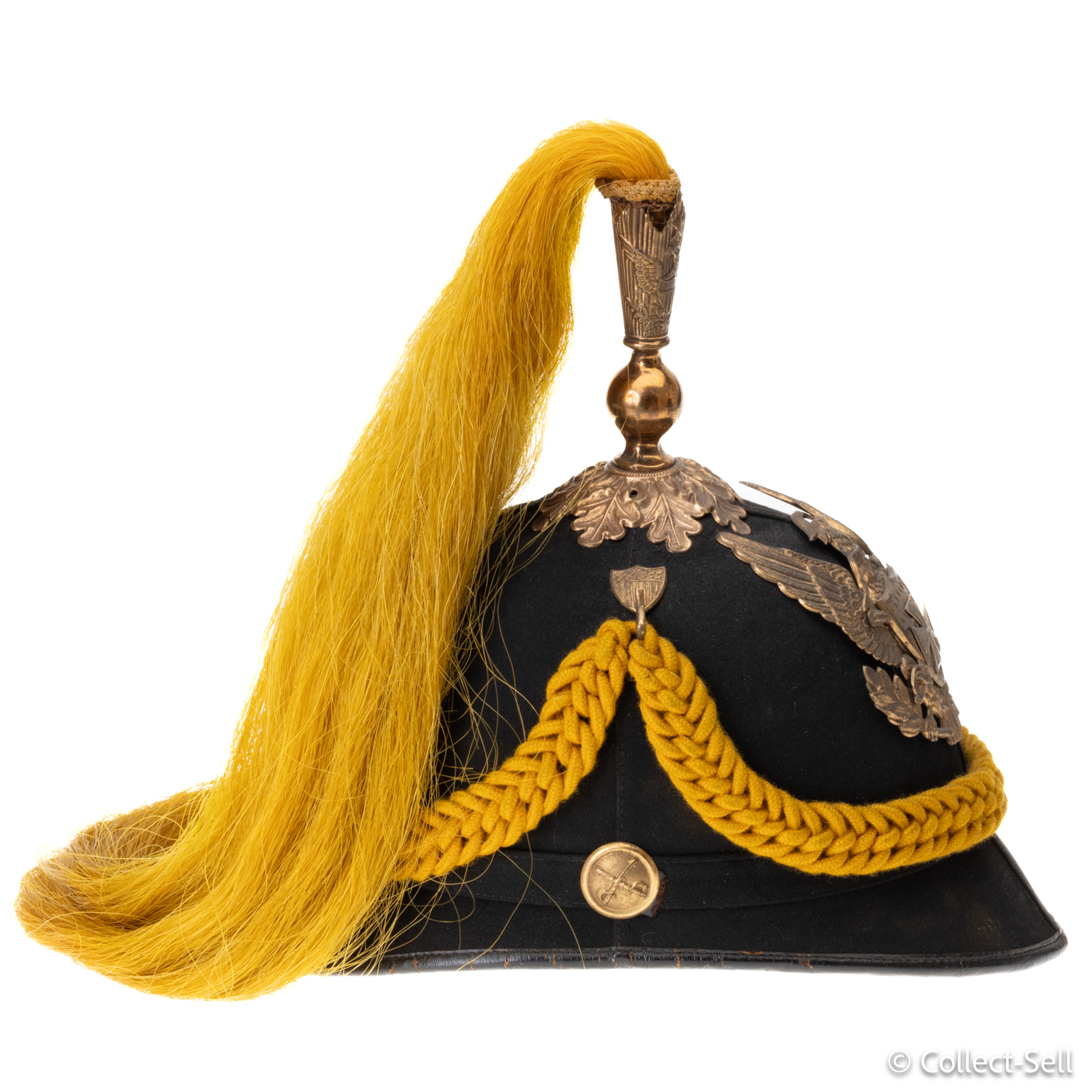
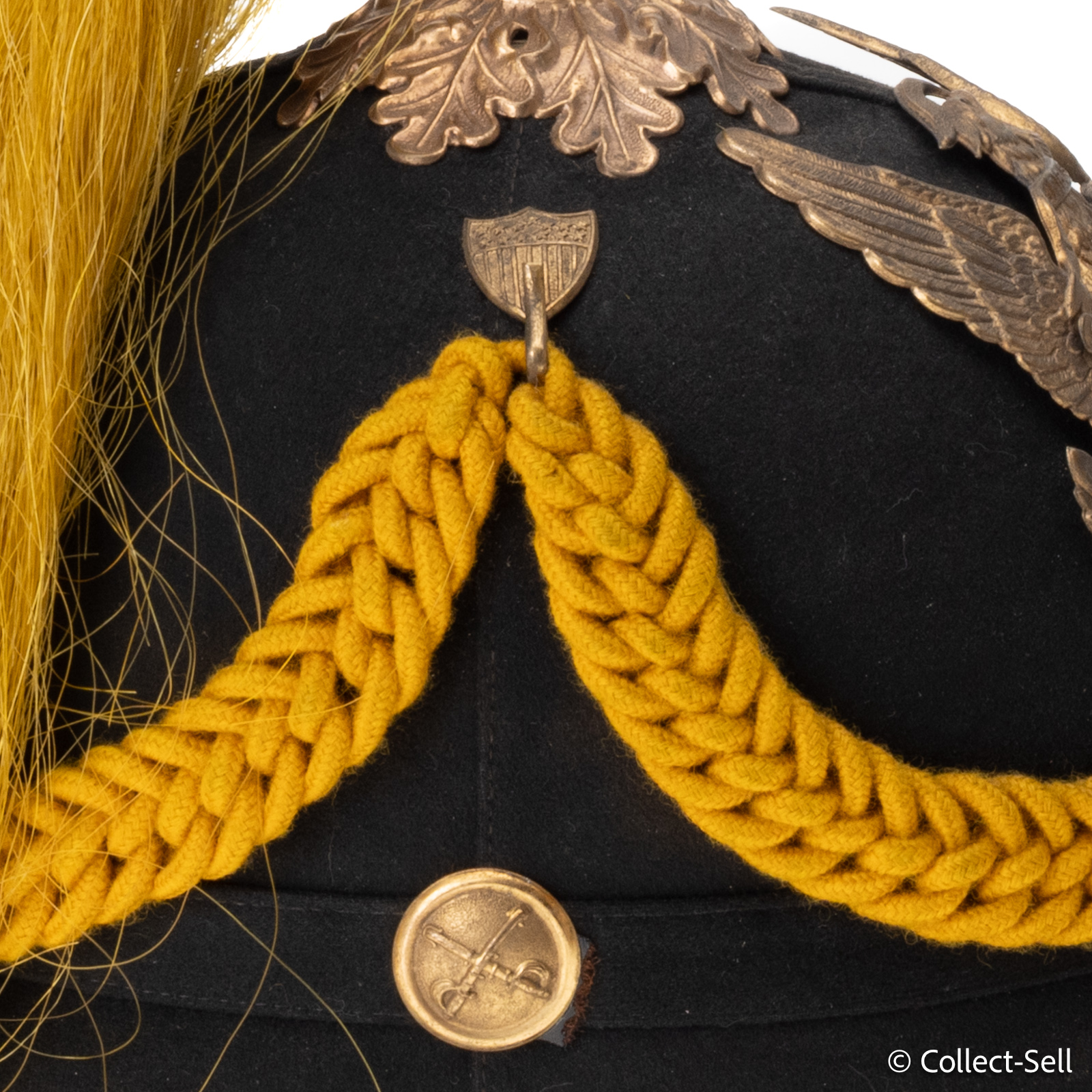
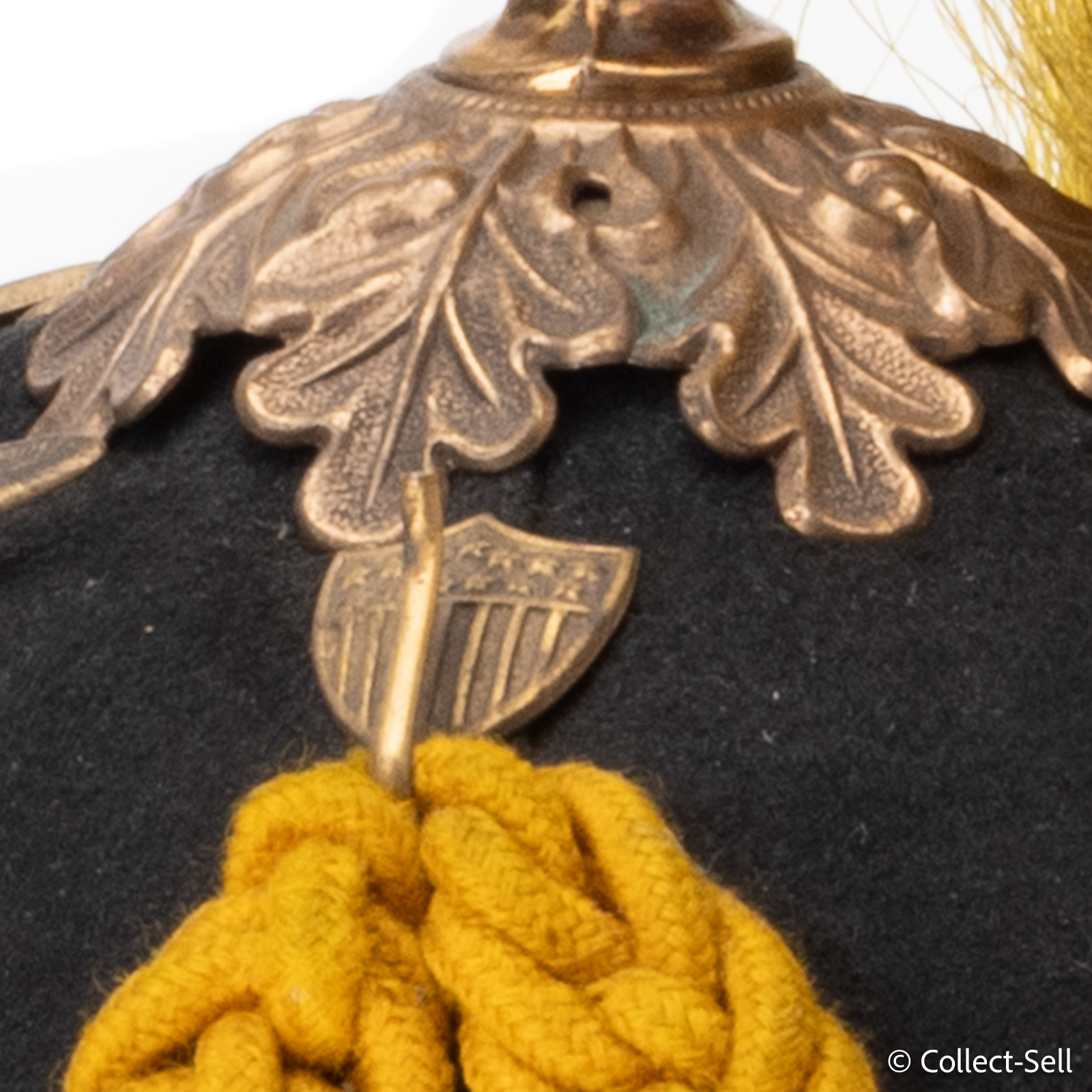
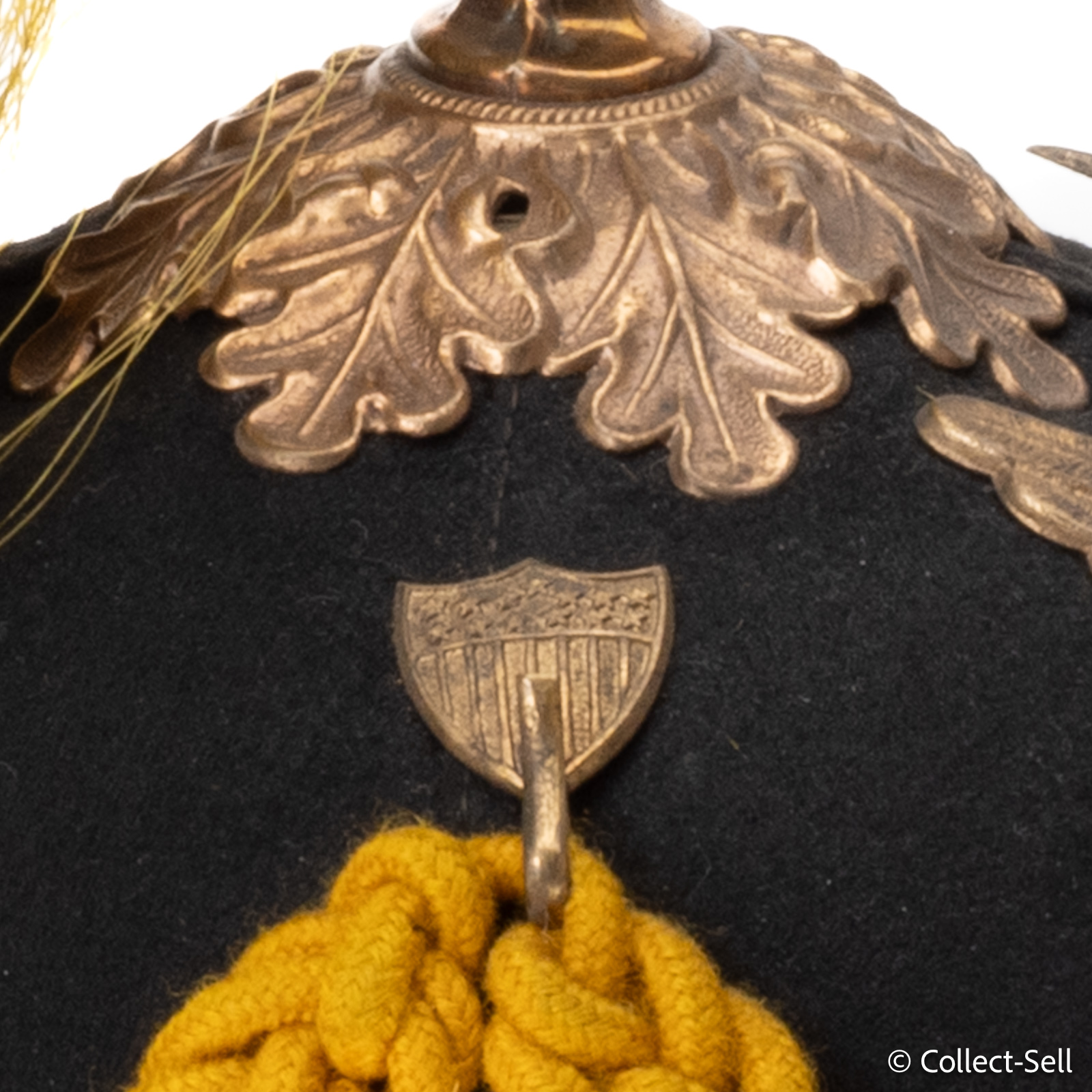
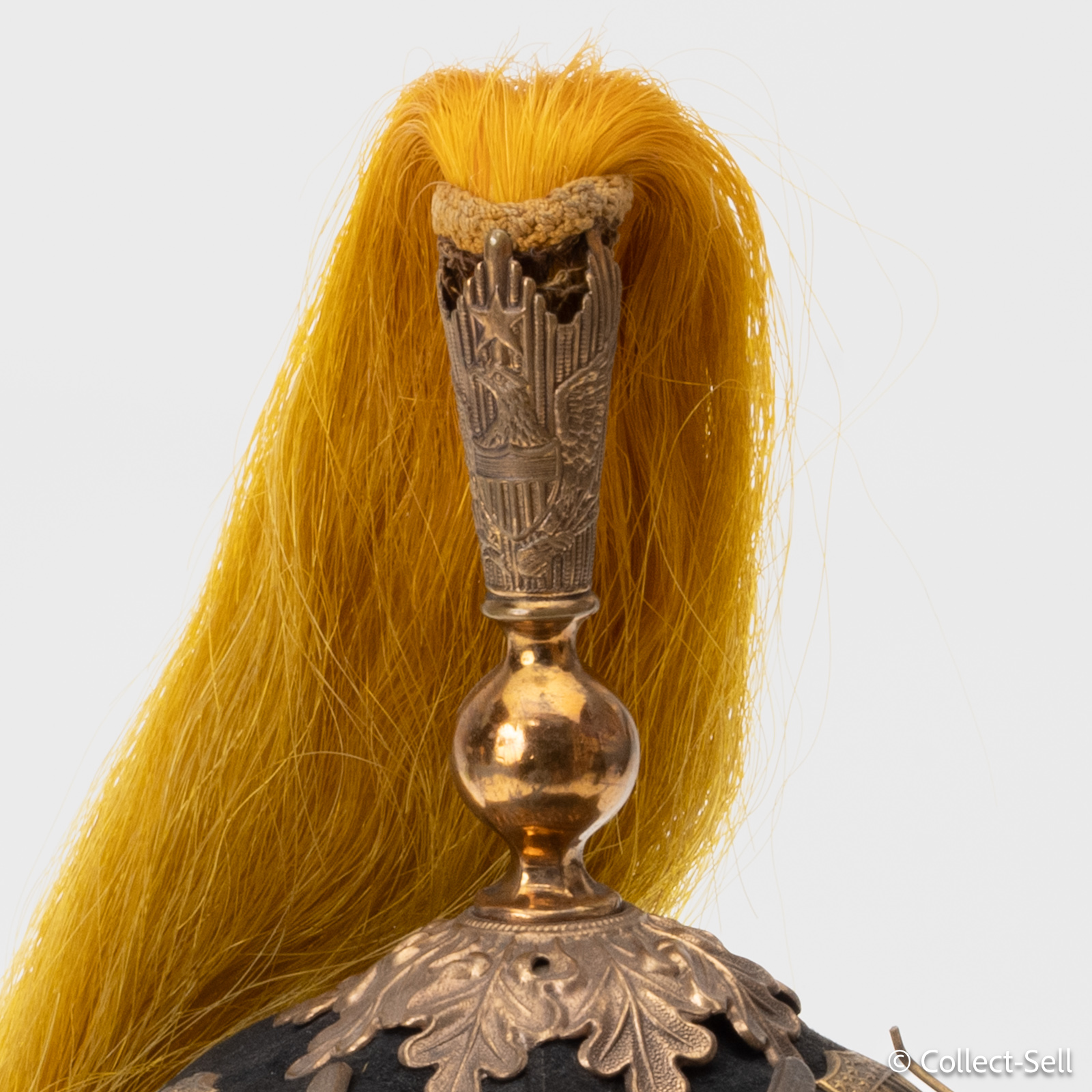
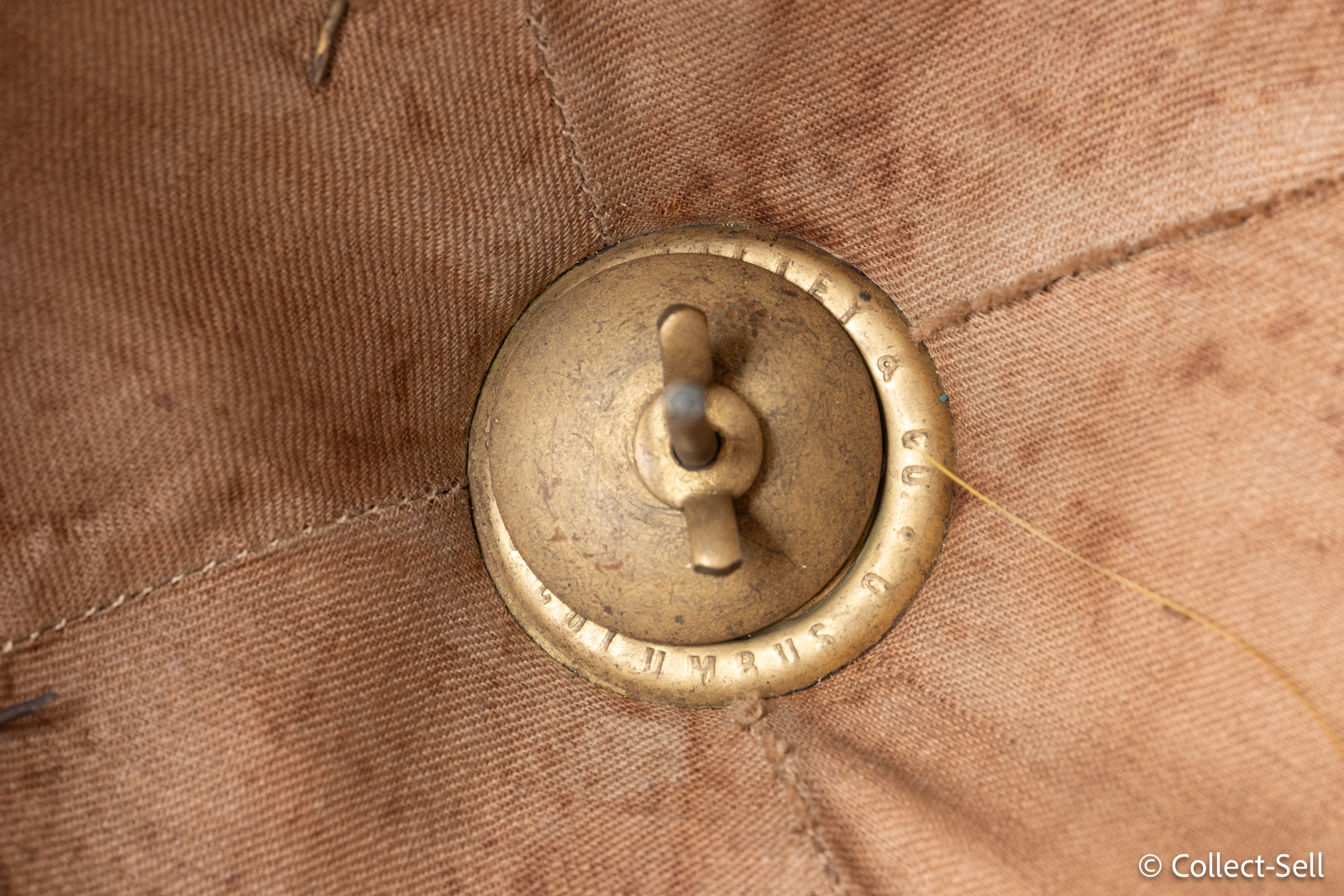
U.S. Cavalry officer’s dress helmet made by M.C. Lilley & Co. in Columbus, Ohio. The helmet follows the 1881 Army pattern used for formal ceremonies. The body is black felt over cork with a leather brim and green underside. The fittings are gilt brass. The plume base is shaped with oak leaves and holds a yellow horsehair plume. The finial has an engraved U.S. shield and star.
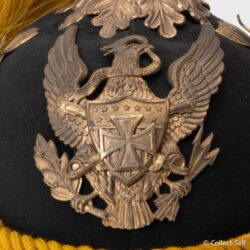
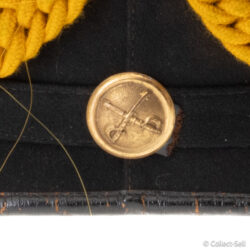
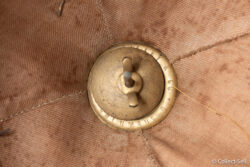
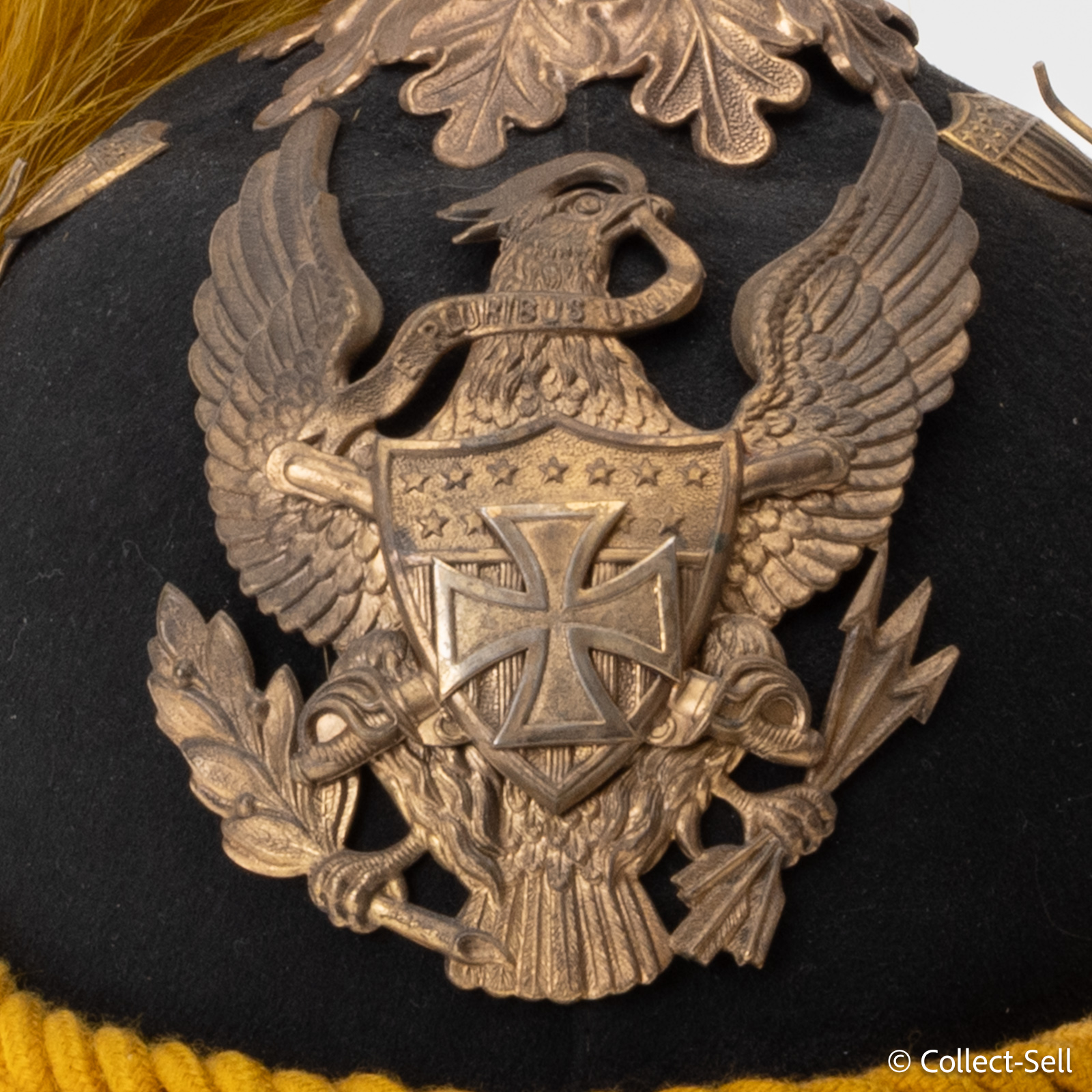
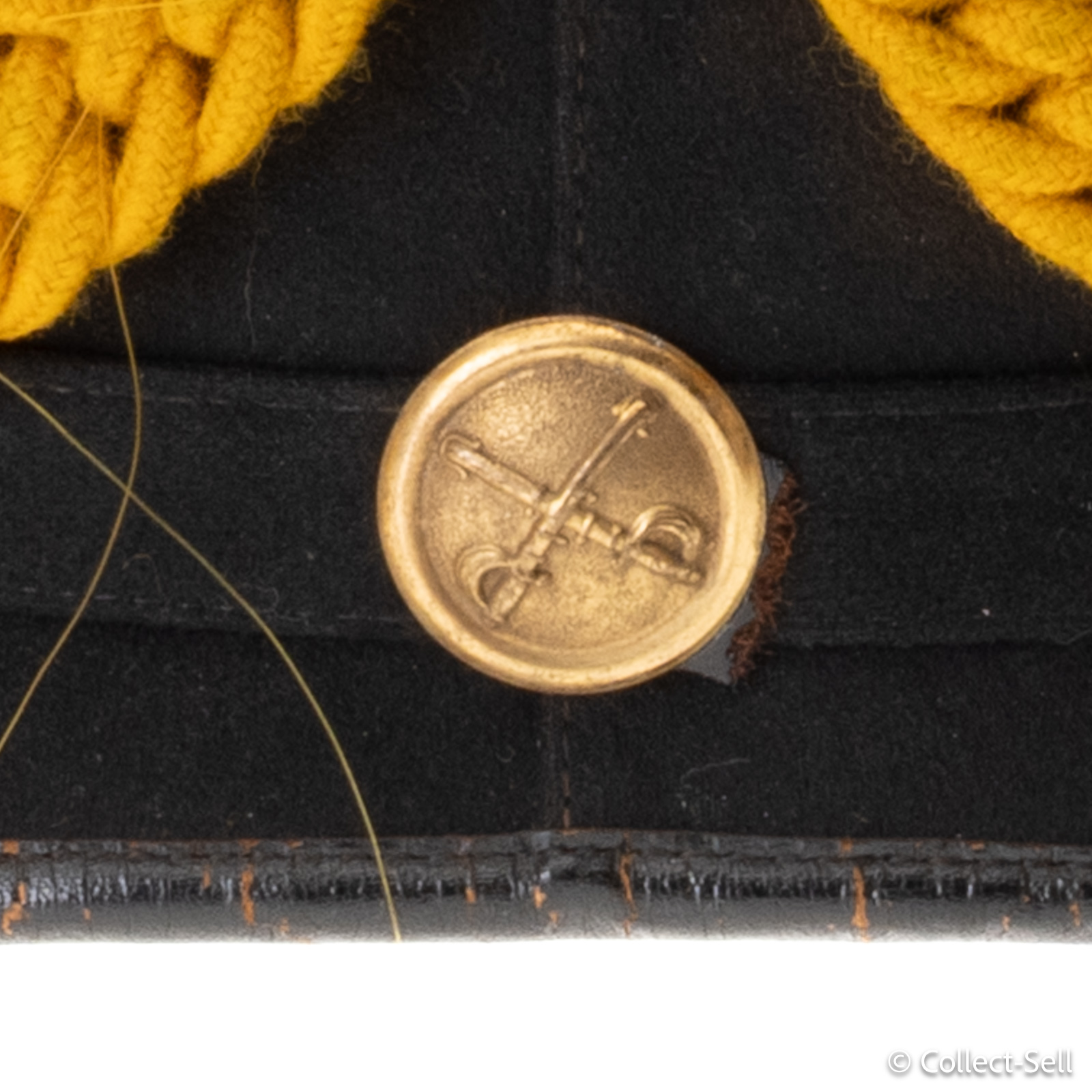
The front plate shows the American eagle with a cross on its shield. This cross replaces the standard regimental numeral. That detail points to a state militia or ceremonial officer who ordered a custom plate. The yellow plume and gold braid confirm Cavalry branch. Both side buttons show crossed sabers. The gilt chain chinstrap connects at these buttons.
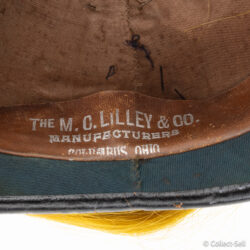
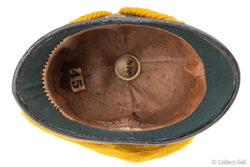
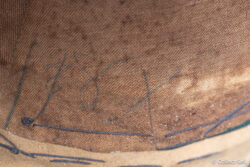
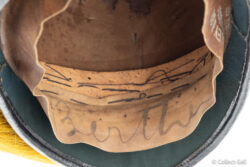
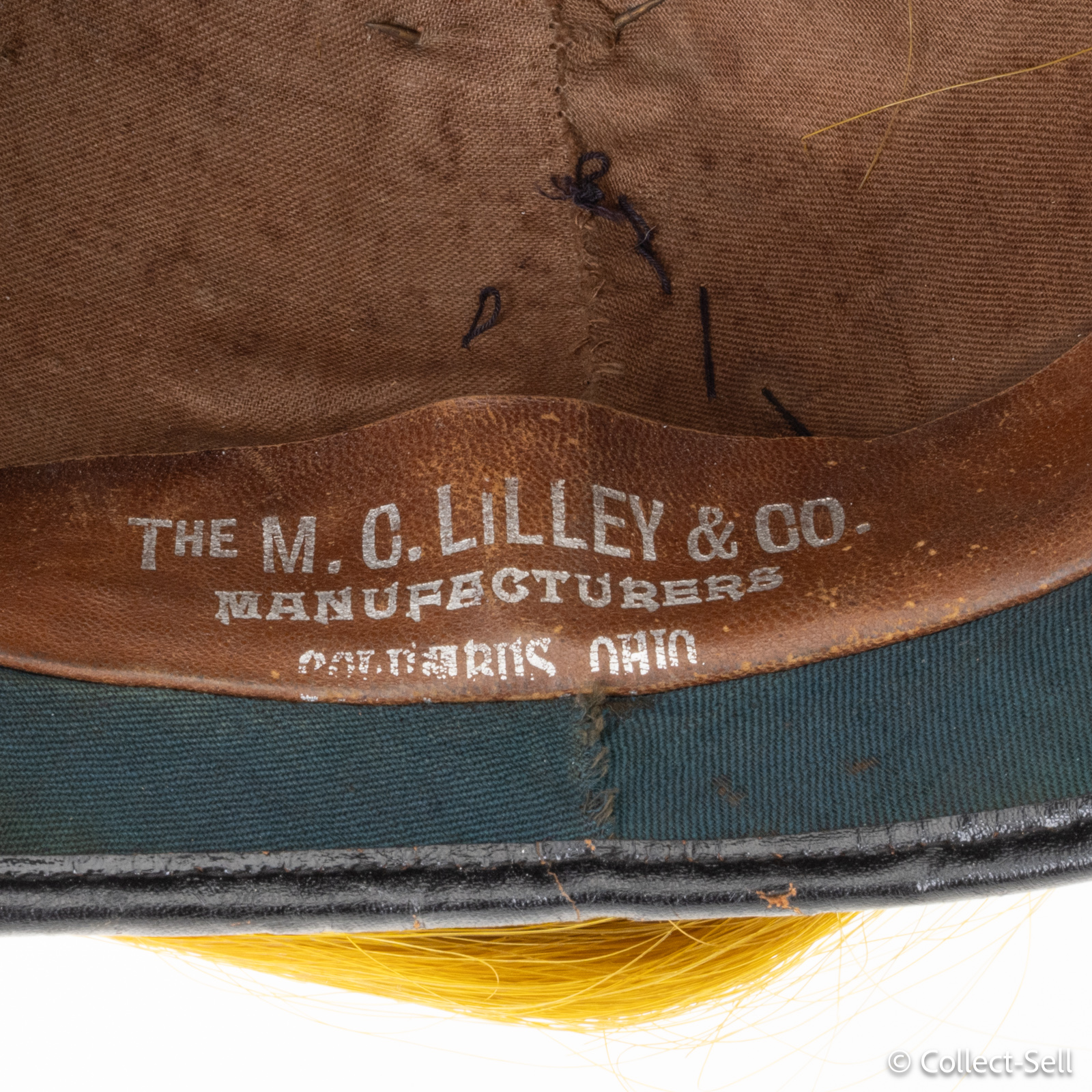
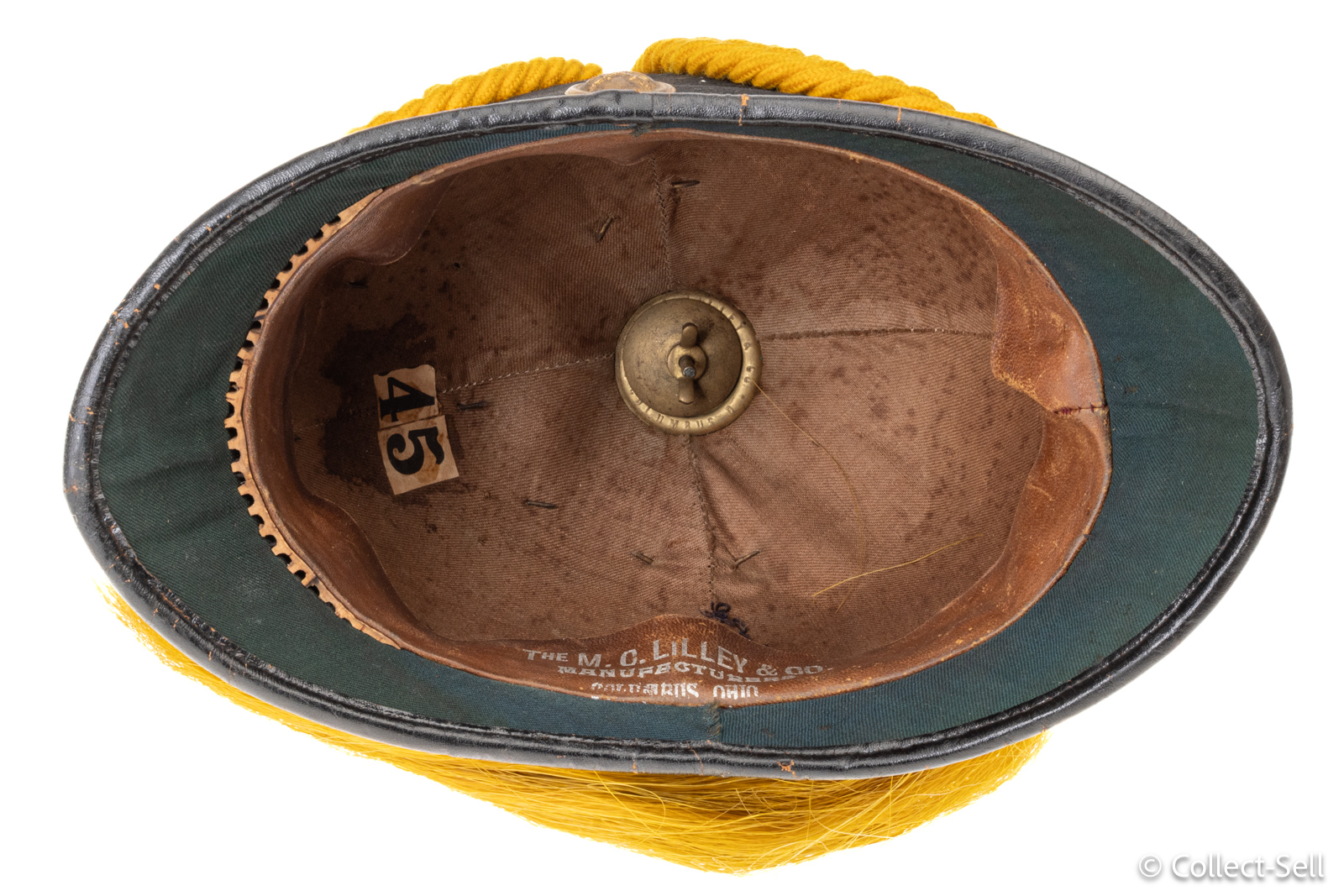
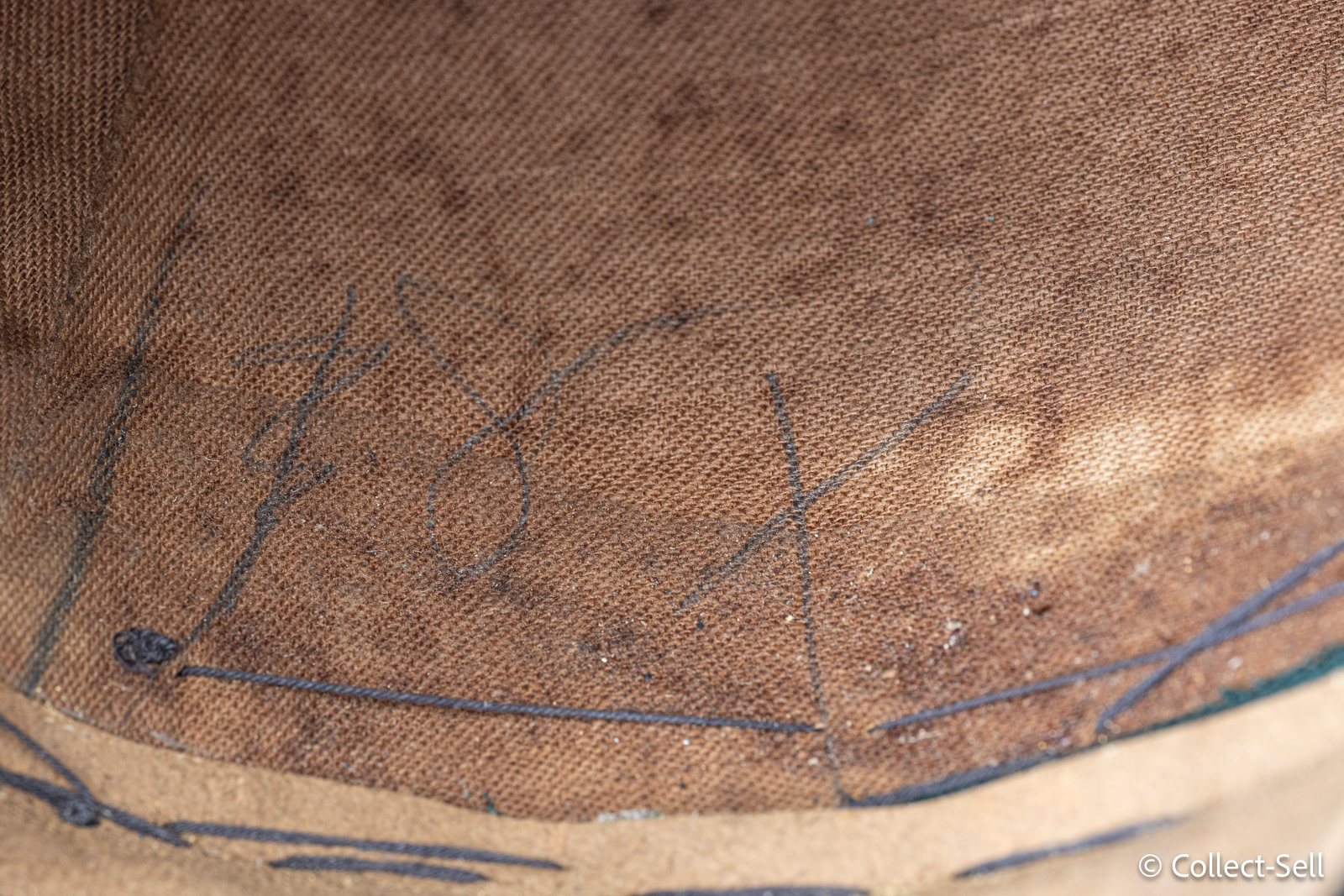
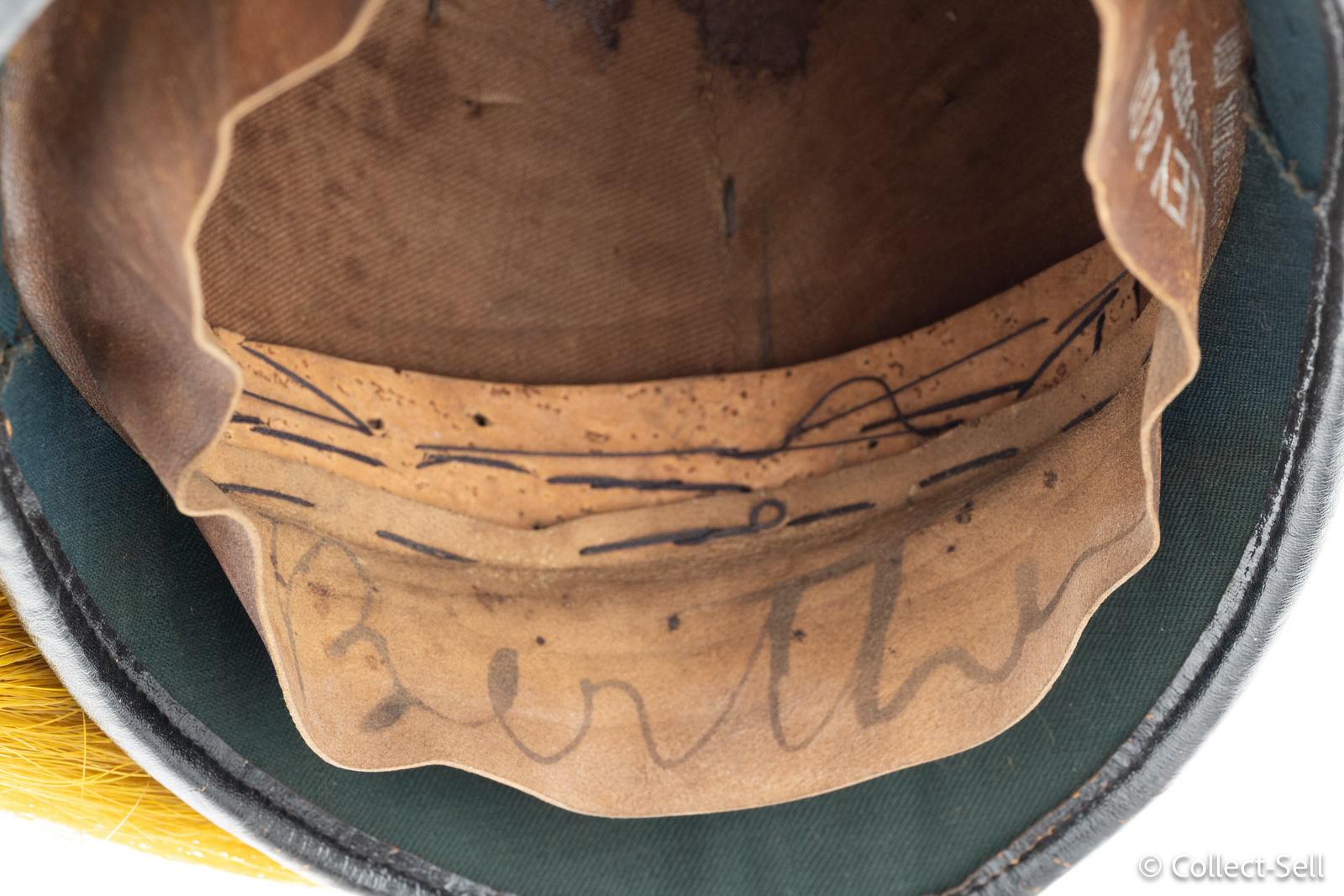
Inside, the leather sweatband is stamped “THE M.C. LILLEY & CO. MANUFACTURERS COLUMBUS, OHIO.” The number tag “45” equals a U.S. size 7 to 7¼. Two inscriptions appear under the band. The name “Berthe” in ink, and the pencil mark “18X.”
The Model 1881 replaced the 1872 pattern and was worn for full dress occasions only. Cavalry officers used yellow plumes, Infantry used white, and Artillery used red. Officers purchased these helmets privately through outfitters such as M.C. Lilley. The design was formal and represented the peak of late 19th century U.S. Army dress.
Condition is near mint. The felt surface is strong with minor edge wear on the brim. Brass fittings have even patina. The plume is complete and retains strong color. The interior shows use but remains sound.
The M.C. Lilley & Company was founded in 1865 in Columbus, Ohio, by Mitchell C. Lilley, a Civil War veteran. The firm began as a supplier of uniforms and swords to veterans’ groups, including the Grand Army of the Republic. Within two decades, it became one of the largest uniform manufacturers in the United States.
Lilley produced military, police, and fraternal regalia, including helmets, swords, buttons, epaulettes, and complete dress uniforms. The company’s catalogs offered everything from U.S. Army officer helmets to Masonic and Knights Templar dress gear. By the 1880s, M.C. Lilley & Co. supplied uniforms to the Regular Army, state militias, and civic organizations nationwide.
Their helmets followed the official U.S. Army patterns but allowed customization for state or ceremonial use. Clients selected plume colors, insignia, and decorative details. This flexibility made Lilley the preferred outfitter for officers and militia units seeking both regulation and personalized attire.
By the 1890s, the company expanded internationally, exporting regalia to Canada and Europe. It operated multiple factories in Columbus and employed hundreds of workers. Lilley merged with other firms around 1925 to form the Lilley-Ames Company, which continued manufacturing uniforms through World War II.
M.C. Lilley products are now recognized for their build quality and historical importance. Helmets with clear maker stamps, complete plumes, and identifiable officer markings are sought after by collectors. The firm’s name remains closely linked to the ceremonial look of the late 19th-century U.S. Army and state militia.